Worth Their Weight in Gold
 Linkedin
 Google +
China’s early nuclear energy developer looks back on the rocky road to self-reliance
In China, there is a group of people who are collectively known as Gold Man. Like fictional superheroes Iron Man and Spider-Man, they are associated with super power, but instead of being its wielders, they are the guardians and strategists of the super power, which is nuclear energy.
In the late 1970s, after reform and opening up boosted development and triggered a demand for more energy, China embarked on developing nuclear power. In March 1981, the State Council, the cabinet, said the focus would be to support the national economy and improve people’s lives by developing a diversified energy base.
The program of building nuclear power reactors started but since there was little knowhow at home, 115 young professionals with some knowledge of nuclear technology were sent to France and Britain in three batches to receive training in designing, building and running nuclear plants.
The one-year training program cost 1.3 million French francs ($260,000 at the then exchange rate) per participant on average. It was equal to the price of 60 kg of gold. That’s how the group got their name Gold Man.
Chen Weizhong was one of the Gold Man family. He was 26 at that time and was in the second batch who went to France. Since then, he has played a continuous role in the development of nuclear energy in China.
Steeled under pressure
When Chen went to Xi’an Jiaotong University in northwest China’s Shaanxi Province in 1982, he chose nuclear reactor engineering as his major because of a new development in the country. “At that time, I had no idea which major would have better prospects,” he said.
The university was admitting 10 students from his province, Guangdong in south China, that year and half of the reserved seats were for his major. “We heard the government was planning to develop nuclear energy and build nuclear plants,” he said. His high school teacher advised him to go for it.
When China began to mull developing nuclear energy, Deng Xiaoping, the chief architect of reform and opening up, suggested importing nuclear plants from France. At that time, however, a French plant cost $4 billion whereas China’s foreign exchange reserves totaled just $167 million.
So the government decided to build the plants domestically and in 1982, the State Council announced that the first nuclear plant for commercial use on the Chinese mainland would be built in Guangdong.
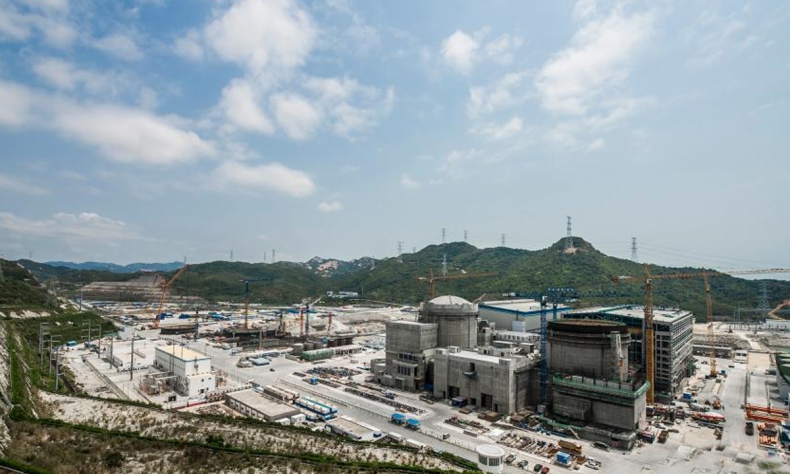
Work on the Daya Bay Nuclear Power Station, about 55 km north of Hong Kong, started in 1987. It was a prime example of multilateral cooperation. Two investors, Guangdong Nuclear Power Joint Venture Co., (currently the China General Nuclear Power Corp. or CGN) and China Light and Power Holdings (CLP) came together to undertake the project. The reactor technology came from a French company, the construction was managed by another French company, and the equipment was British.
While the CGN and the CLP jointly funded 10 percent ($400 million) of the project, the remaining 90 percent came from foreign loans, making it the biggest project involving foreign investment at that time. About 70 percent of the electricity the plant would generate was to be sold to Hong Kong to earn foreign exchange and repay the loans.
Chen was assigned to the CGN after graduation in 1986. A year later, when construction of the Daya Bay Nuclear Power Station started, he heard they may have an opportunity to study abroad. In preparation, the candidates began to take courses in nuclear technology and foreign languages under foreign instructors. Finally, there was a tough screening process and Chen found himself on the final list.
In France, Chen saw a real nuclear plant for the first time. “Every button on the instrument panels was unfamiliar,” he confessed.
Each Chinese trainee was assigned to a specific position. Chen was a control room operator. “The training was immensely different from college education in China. We had to learn things on our own and clear our doubts,” he recalled. “I went to work with the French instructors during the day to learn practical operation by observation and inquiry. At night, I had to learn theories, prepare questions for the next day and write reports on what we learned. We also had examinations every two weeks. It was a packed schedule.”
Language was another big challenge. “I was in an unfamiliar environment where I had to talk with some 20 French people to understand the procedures. There was no one to turn to for help,” Chen said.
When he left for the training, his child was just 6 months old. “It was hard to stay in touch with my family,” he said. “Long-distance calls cost 20 francs ($4) per minute.” He remembers feeding coins one by one into the public phone’s coin slot to keep the conversation with people at home going. “Most families in China did not have telephones, so they had to calculate the time difference between China and France and bother a neighbor, who had a phone.”
On the other hand, the Gold Man family made new friends among their French instructors and colleagues. Chen remembers exchanging cooking recipes in their spare time. “The French like Chinese dishes, and they were willing to help us,” he said jokingly.
Despite the difficulties, the experience in France was critically important to the trainees’ careers. “Since the Gold Man group was going to fill crucial positions after they came back to China, their experience was essential to the country’s nuclear energy development as a whole,” Chen said.
A meticulous witness
Even after his return to the Daya Bay Nuclear Power Station, things did not become easier. Apart from routine work like devising operating and safety programs, Chen had to instruct the technicians on site and they encountered unforeseen difficulties. “Although we learned a lot in the past year, it was still brief and we lacked experience,” he said.
Once, the engineering team installed a piece of equipment and the production team had to ensure everything was fine so that it could start working. Chen found himself at a loss over what to do.
“In France, we didn’t go through this stage as we worked in mature plants and not units under construction,” he explained. So the French experts had to be called in for assistance.
Despite the odd setback, China’s nuclear energy development plan made progress and in 30 years, has reached its golden era from the Gold Man era.
“Currently, we have 47 nuclear energy operating units on the Chinese mainland, the third highest in the world,” Chen said. It means almost every year on average, a new unit is built. But since the construction cycle for one unit is normally five years, the actual development occurred in just eight to 10 years. “It was unparalleled speed,” he said.
The past 30 years have seen nuclear energy technology in China experience leapfrog development. At a conference on nuclear power in Paris in 2005, Zhang Huazhu, then Chairman of the China Atomic Energy Authority, described the progress, saying a fairly complete nuclear industrial system had been formed, from uranium ore mining and uranium conversion to designing plants, manufacturing equipment and operation management.
“A nuclear power industry is taking shape absorbing the advanced experience of other countries and in conformity with China’s national situation,” Zhang said. “In the future, we will continue to depend mainly on our own efforts while carrying out international cooperation to introduce advanced and proven nuclear power technology, and promote self-reliance in designing and localization in equipment manufacturing to attain the planned objective.”
Chen has been a witness to and participant in this nuclear self-reliance, contributing his expertise to Daya Bay and two more nuclear plants, both in Guangdong.
“During the Daya Bay era, almost every single thing, even the tiles and telephones, was imported,” he recalled. When Phase I of the Ling’ao Nuclear Power Station, Chen’s second assignment, started in 1994, some of the peripheral components were produced domestically but the core parts came from abroad and the localization rate was still low. However, when the Yangjiang Nuclear Power Station started in 2007, the average localization rate had reached 83 percent and almost 85 percent of the core parts were made domestically.
The HPR1000 nuclear reactor, designed at home, has nearly 90 percent localization and is part of China’s foreign cooperation drive in nuclear power. The design is in use in Pakistan and has been included in cooperation plans with nearly 20 countries, including the UK and other Belt and Road participants.
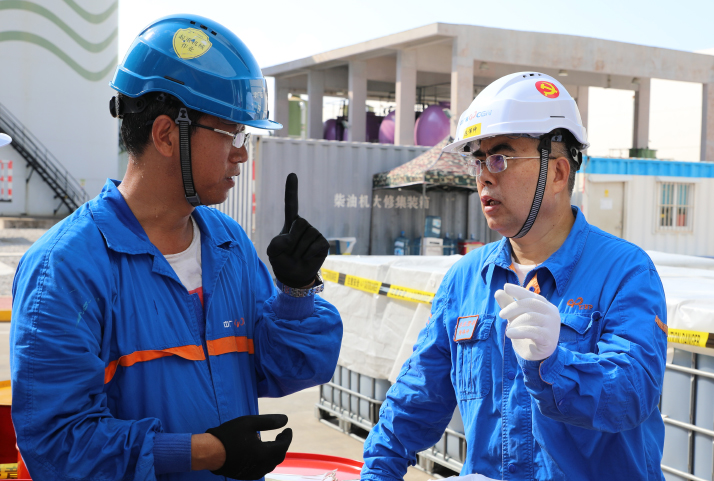
Chen is now general manager of the Yangjiang Nuclear Power Co. Ltd., a subsidiary of CGN. He is no longer the young man who did not know what sort of career his nuclear major might lead to but an expert with a leading role in China’s nuclear energy development.
One important thing the Gold Man learned in France is precision, which they have drummed into the Chinese apprentices they trained when they came back. “Nuclear safety is our top priority,” Chen said. He emphasizes the culture of safety and precision at the Yangjiang Nuclear Power Base. The other two keywords are dedication and commitment.
“Today, it is easy to construct a nuclear power plant in five or six years as the knowledge can be acquired and the experience accumulated. But its operation and maintenance will last over decades, which requires the inheritance of a nuclear culture and technological innovation,” he said.