The Role of the G20 in Fostering Sustainable Growth Through Green Finance
 Linkedin
 Google +
The multilateral commitment to promoting sustainable growth through green finance by the G20 is increasingly important at a time when US President Donald Trump is reversing previous efforts by the United States to lead the agenda.
Aligning the financial system with sustainable development to ensure economic prosperity compatible with a 2 C global temperature rise limit will require the involvement of actors across the financial system from international organizations, national policymakers and regulators to the private sector including ratings agencies, stock exchanges and investors.
The G20 is uniquely placed to lead this agenda, and has done so since April 2015 when it asked the Financial Stability Board to consider climate risk. This led to the launch of the industry-led Task Force on Climate-related Financial Disclosures to develop recommendations on climate-related financial disclosures while the G20 Finance and Central Bank Deputies meeting in December of that year in Sanya proposed the launch of the Green Finance Study Group (subsequently enhanced to be the Sustainable Finance Study Group). Under China’s presidency of the G20 in 2016, green finance was officially added to the group’s agenda, a momentum maintained under the German and Argentinian presidencies.
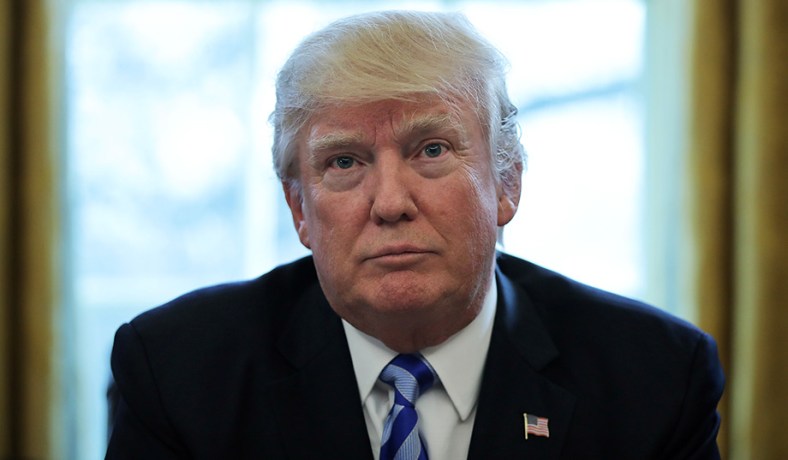
The multilateral commitment to promoting sustainable growth through green finance by the G20 is increasingly important at a time when US President Donald Trump is reversing previous efforts by the United States to lead the agenda. Perhaps paradoxically, his decision in June 2017 to withdraw the US from the 2015 Paris Agreement – revealing a familiar undercurrent of global politics and a move from multilateralism to bilateral relations – has provided impetus and created momentum for others to advance efforts. Rhetoric is being matched with action, and the G20 is playing an important role in areas such as knowledge-transfer, standards-setting and coordination.
Irrespective of political debates, the financial sector is becoming increasingly aware of the risks from climate-related developments. Environmental degradation can affect financial asset values directly. Natural disasters such as storms, flooding, droughts and fires can lead to large financial losses. If insured, these will directly affect insurance firms through higher claims. If uninsured, the burden will fall on households and firms and reduce the value of investments held by financial institutions. In turn this could increase credit risk for banks if these assets serve as collateral for bank loans, leading to a reduction in credit supply and hurting household consumption and business investment.
There could also be a potential influence on monetary policy from climate-related volatility in headline inflation resulting from food and energy price shocks. Aside from natural disasters, even gradual changes in weather patterns such as reduced snowfall and rising sea levels in tourist areas can affect the value of equities and bonds, real estate and infrastructure assets.
There is also risk presented by the legal and adjustment cost that the financial sector will incur in transitioning towards a lower-carbon economy. Changes in climate policy, technology or market sentiment to avoid a more than 2 C rise in global temperature could cause a reassessment of the value of a large range of assets presenting risks to financial stability and the soundness of financial firms.
Climate risks could even have wider systemic impacts, for example through economic disruption, resource shortages, damages to the capital stock and infrastructure, and associated reductions in productivity and increases in sovereign default risk.
The realization that climate risks are financial risks is a first step, but is not enough by itself. Financial markets often lack information about their exposure to such risks of sufficient quality and quantity to ensure appropriate allocation of capital. Policymakers and regulators are responding to this need under the recommendations of the G20.
In August 2016, the People’s Bank of China (PBOC), China’s central bank, along with six other ministries, launched Guidelines for Establishing the Green Financial System. The guidelines’ objective is to mobilize and incentivize more capital investment in green sectors, enabling the transition to a low-carbon economy. The guidelines also stress the important role played by the securities market in financing green investment and require a gradual establishment of a mandatory environmental information disclosure system for listed companies and bond issuers.
Just over a year later, in December 2017, the central banks of France, the Netherlands, the United Kingdom, Germany, China, Singapore and Mexico founded the Central Banks and Supervisors Network for Greening the Financial System (NGFS) to allow central banks and supervisors to exchange experience, share practices and contribute to the advancement of environmental and climate risk management in the financial sector. The network’s first progress report was published in October 2018, highlighting the role central banks can play as regulators but also as investors in advancing the green finance agenda.
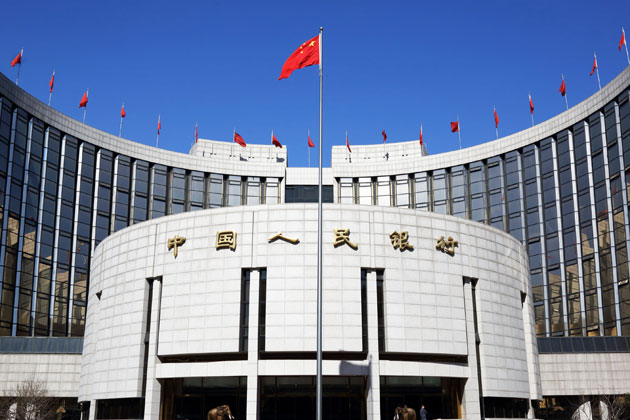
So far, only the PBOC among NGFS members has a dedicated policy to promote green finance via monetary policy, and the central bank has also introduced green bond standards and green banking regulation. Additionally, China is the only major economy where compulsory requirements for listed companies to disclose their environmental plans and spending are in place, a critical initiative to help drive global markets towards the funding of more green projects.
Investors are also contributing, with the green bond market acting as a prime example of channeling funds towards green initiatives. While still small (green bonds outstanding total around $400 billion), the market is growing fast and annual issuance has been doubling since 2015. For two years in a row, China has been the world’s largest issuer of green bonds, issuing $37.1 billion in 2017, almost a quarter of the global total in that year. This is up from $24.9 billion in 2016, the year in which China overtook France ($16.0 billion), Germany ($8.8 billion) and the US ($7.1 billion).
Climate change is too urgent a threat to allow for any complacency. The G20’s work has created important momentum and it is crucial that this continues to drive the agenda. Specifically, the G20 should lead in promoting the standardization of green finance practices and enhance transparency and disclosure of environmental risks on a global scale, to help overcome the barrier of information asymmetry and inadequate analytical capacity with regards to green investments. More broadly, innovative financial solutions will be needed to overcome the maturity mismatches between the long-term returns of green assets and the short-term interests of investors and savers.
Finally, especially in developing countries, the low level of market development can act as a barrier for accommodating green finance investments. As an emerging economy within the G20, China has the responsibility to ensure that developing markets that may lack the fiscal space and ability to raise funds through capital markets can receive the necessary technical and potentially also financial support in implementing national sustainable finance roadmaps.
Danae Kyriakopoulou is chief economist and head of research at the Official Monetary and Financial Institutions Forum, an independent think tank for central banking, economic policy and public investment.?The author contributed this article to China Watch exclusively. The views expressed do not necessarily reflect those of China Focus.
Exclusively from China Watch